
If you aspire to join multinational private sector firms or prestigious international public organizations, specifically the United Nations system, you must master the STAR method. A classic preparation will not suffice. You must transform your past experiences into stories of impact. This is where the STAR method comes in.
My personal research allowed me to prepare intensely before joining several institutions, and since then, it has become my compass for every high-stakes interaction. It is not only a practical tool but, above all, a methodical discipline that reassures even the most demanding recruiters worldwide. By mastering this technique, you no longer simply answer questions: you demonstrate your added value with disarming clarity.
Before diving into the practical application of this tool, it is essential to understand where this technique comes from and why it has established itself as the standard of excellence for aspiring leaders. A method that survives the test of time is one that has proven its effectiveness on the ground of results.
1. Genesis and power of the STAR Method: Why it is your best ally
The world of recruitment has changed radically. Today, behavioral interviews dominate: you are no longer asked what you would do, but what you have actually done. The STAR method is the structured response to this requirement for proof. It allows you to discipline your thoughts to avoid the pitfalls of generality and imprecision—two enemies of your credibility before a high-level panel.
a. Origin: From american efficiency to international standards
The STAR method was developed by Canadian psychologist and HR teacher Tom Janz in the 1980s as a response to the need to professionalize talent selection. It was quickly adopted by HR departments of the largest Fortune 500 companies before becoming the bedrock of the Competency-Based Interview (CBI) within the United Nations, the World Bank, and international NGOs. Today, whether you are in New York, Paris, Abidjan, or Tokyo, the STAR method is the universal language of professionals of excellence. It is the extension of Anglo-Saxon rigor applied to global career management.
b. Advantage 1: Unshakable clarity and structure
One of the greatest challenges in an interview is stress, which often pushes us to be confused or too long-winded. This tool acts as a safety rail. By following this framework, you guarantee that your narrative has a beginning, a middle, and a logical end. You avoid unnecessary digressions that cause the recruiter to lose the thread. This structure shows that you possess organized thinking, a fundamental quality for any international management or coordination position where clarity of communication is paramount to the success of missions.
c. Advantage 2: Highlighting tangible results through the STAR Method
Unlike vague answers, the STAR method forces you to talk about results. In today’s professional world, only the result matters. By using this method, you highlight your ability to transform a complex situation into measurable success. This transforms your interview into a quiet demonstration of strength. You do not simply claim to be competent; you provide irrefutable proof. It is the ultimate technique for moving from “saying” to “doing” in the eyes of the jury.
d. Advantage 3: Increased recruiter recall

Recruiters see dozens of candidates. To stand out, you must be memorable. The narrative structure of this method transforms your experience into a structured “story.” The human brain retains narratives far better than lists of skills. By telling how you resolved a conflict or managed a crisis, you create a mental image for the interviewer. You cease to be an anonymous CV and become “the leader who stabilized Project X in the middle of a crisis,” which greatly facilitates your final selection.
e. Advantage 4: The STAR Method boosts personal confidence
Preparing with this tool means building a library of ready-to-use victories. When you have mapped your experiences according to this acronym, no question can destabilize you. You know exactly which story to pull out to illustrate your leadership or integrity. This preparation drastically reduces imposter syndrome and anxiety. You arrive before the panel with the confidence of someone who knows their value and knows how to demonstrate it, which positively influences your body language and tone of voice.
We recommend reading this article on: your professional fulfillment – How to prepare well and build in the shadows?
To make this method work, you must first understand the acronym to identify the role of each component. Each letter is an important step contributing to the building of your success.
2. Decoding the acronym: Steps to giving a perfect answer
Mastering the STAR method requires respecting precise proportionality. Too many candidates spend 80% of their time on the context, forgetting that what interests the recruiter is the action and the result. Here is how to balance your performance for a professional melody without a false note.
a. S for Situation: Setting the stage with precision
The situation is the setting of your story. It must be brief but specific. Do not remain vague, such as “When I worked in logistics…”. Be precise: “In 2022, during my mission for the WFP in South Sudan, we faced a brutal supply chain disruption due to a border conflict.” You must provide enough elements for the jury to understand the stakes without boring them with superfluous technical details. The situation should not represent more than 10% of your total response.
b. T for Task: Defining the goal and the challenge
The T in the STAR method describes the task. This is what was expected of you in that specific situation. What was the challenge to be met? Was it to reduce costs by 15%, recruit a team in two weeks, or resolve a conflict between two departments? This step is crucial because it sets the milestone against which your success will be measured. It is here that you show your understanding of strategic stakes. You must clarify your specific responsibility: what YOU had to do, and not the team in general.
c. A for Action: The heart of your leadership
This is the most important part, the one that should occupy 60% of your speaking time. Here, you must use “I” and not “WE.” Explain step-by-step what you did: “I first gathered the stakeholders, I analyzed the performance data, then I proposed a three-point action plan.” Detail your reasoning, your choices, and how you overcame obstacles. This is where the recruiter evaluates your technical skills, your emotional intelligence, and your decision-making capacity under pressure.
d. R for Result: The achievement of your intervention
A STAR story without a result is like a movie without an ending: it is frustrating. You must conclude by showing the impact of your actions. Use numbers if possible: “Thanks to this, we restored distribution within 48 hours and saved $20,000.” If the result is qualitative, be specific: “The social climate calmed down, and collaboration between teams was permanently restored.” The result proves that your actions have real economic or human value. It is the signature of your professionalism.
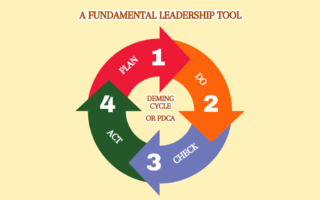
We advise you to read this article on: the Deming cycle – a powerful leadership tool.
Understanding the acronym is one thing; using it to radically transform your interview performance is another. Now, we move on to the preparation strategy for your next big appointment.
3. Advanced strategies for succeeding in your yext job interview with the STAR Method
An interview does not begin when you enter the room, but weeks or several days beforehand. Success is a science of preparation. For those aiming for excellence, it is about transforming their past into an arsenal of skills ready to be deployed.
a. Critical analysis and skill mapping
The first step is to dissect the Job Description. Do not just read it: underline the action verbs and the key skills sought. For each skill (e.g., Leadership, Teamwork, Integrity), look for two STAR stories in your background. This is what I call skills mapping. You must have an answer ready for every requirement of the position. This anticipation ensures you are never caught off guard and shows a perfect fit with the organization’s needs.
b. Selecting high-impact examples: Quality Vs. Quantity
Do not choose mundane anecdotes. Look for moments where you truly made a difference, where you had to demonstrate resilience or innovation. Your examples should reflect your level of seniority. If you are applying for a management position, your STAR examples should focus on vision, strategy, and complex crisis management, rather than purely operational tasks. Each story must carry a lesson and demonstrate a facet of your identity as a fulfilled leader.
c. The discipline of repetition: Professional training with the STAR Method

Like a stage actor, you must rehearse your stories. Time yourself: generally, a good STAR answer should last between 3 and 5 minutes maximum. Practice in front of a mirror or, even better, record yourself. Listen to your tone of voice, track hesitations, and verbal tics. Repetition allows the STAR structure to be anchored in your subconscious. On the big day, the structure will come out naturally, giving you the freedom to be authentic and connect emotionally with the jury because you are no longer searching for your words.
d. The art of failure and mitigating weaknesses
This is a point where many fail. When asked about a failure or a weakness, do not use “fake weaknesses” (e.g., “I am too much of a perfectionist”). This is a mistake I see too often. Be honest about a real weakness, but use STAR to show how you manage it.
For example: “I tend to be impatient with administrative delays (Weakness). I therefore set up an anticipatory tracking system (Mitigation/Action) which reduced delays by 30% (Result).” This is what I call “risk mitigation” applied to character.
To illustrate these concepts, nothing beats practical case studies. Wes hall now examine how to answer typical questions in various areas of expertise.
4. Practical immersion: 4 STAR Method scenarios to convince
Here are concrete examples to help you visualize how to structure your answers according to the nature of the competency being tested.
a. Technical skills verified by the STAR Method: Expertise and precision
Classic Question: “Tell us about a complex project where your technical expertise was decisive.”
Response according to the STAR method:
(S) Imagine a situation where critical financial software crashes during the annual audit.
(T) Your task was to restore the data without loss.
(A) You personally led the recovery by isolating the corrupted servers and rewriting the transfer scripts.
(R) Result: 100% of the data was saved, the audit finished on time, and you implemented a backup protocol that prevented any recurrence.
b. Managerial skills: Leadership and vision
Classic Question: “How did you handle a collaborator whose performance was declining?”
Response according to the STAR method:
(S) A key team member was no longer meeting deadlines.
(T) My mission was to understand the cause and restore productivity.
(A) I organized a private meeting based on active listening, identified a lack of training on a new tool, and implemented mentoring.
(R) Result: In three months, their performance exceeded the initial goals, and they became the team’s technical reference. Here, we see “Agape” love in action: treating the human to save the numbers.
c. Social skills: Conflict and collaboration
Classic Question: “Describe a situation where you had to collaborate with a difficult colleague.”
Response according to the STAR method:
(S) During a department merger, a manager refused to share their information.
(T) I had to ensure data integration despite this reluctance.
(A) Instead of confronting them, I sought to understand their fears (loss of power), involved them in defining the new process, and valued their expertise.
(R) Result: They became the project’s greatest ally, and the merger went smoothly.
d. Resilience and change: Agility under pressure

Classic Question: “Give an example where you had to adapt to a major change in strategy.”
Response according to the STAR method:
(S) Following a 40% budget cut, my development program was almost cancelled.
(T) I had to find a solution to maintain essential activities.
(A) I reviewed the entire cost structure, negotiated new local partnerships to pool resources, and digitized part of the training.
(R) Result: We not only maintained the program but reached 20% more beneficiaries with less budget.
Even with the best intentions, certain pitfalls can undermine your narrative. It is essential to identify these traps in order to avoid them effectively.
5. Performance saboteurs: Pitfalls and fatal errors to avoid
Here are the classic mistakes that can turn a STAR response into a moment of professional discomfort.
a. Chronic imprecision and “artistic vague”
The most common mistake is staying too general. If you say, “We often have meetings to solve problems,” you give no substance to the recruiter. The STAR method requires a UNIQUE and SPECIFIC story. Choose a specific event that took place at a specific time. Lack of concrete details gives the impression that you are making it up or that you did not actually master the situation. A leader must be able to cite facts.
b. The “We” trap: An enemy of the STAR Method
In team projects, there is a tendency out of modesty to say “We succeeded.” In an interview, this is suicidal. The recruiter is not recruiting your team; they are recruiting YOU. If you do not clarify your personal role, the jury will conclude that you were a mere spectator. Be proud of your actions. Say: “Although it was a team effort, I personally took the initiative to…” or “I was responsible for part X.”
c. Exaggeration and lack of honesty
Do not try to embellish reality to appear heroic. Experienced recruiters sense inconsistency. If your result seems too good to be true, they will ask supplementary technical questions that will cause you to fail. Authenticity is a leadership skill. Admitting a difficulty or a mixed result but drawing a powerful lesson from it is far more valuable than inventing an extraordinary success.
d. Temporal imbalance: The agony of useless detail

Some candidates get lost in the “Situation” phase for 5 minutes, explaining the history of the company or the technical details of the project. Result: by the time they reach “Action,” the jury is already disconnected or the allotted time has run out.
Respect the golden rule: 10% Situation, 10% Task, 60% Action, 20% Result. Your mission is to captivate, not exhaust, your listener.
6. Beyond the interview: Other aspects of the STAR Method
This technique is not just a recruitment technique; it is a method of thinking for continuous improvement and daily leadership.
a. The STAR Method as a tool for self-assessment and mentorship
As a leader, you can use this method to evaluate your own quarterly performance or that of your collaborators. Instead of asking “How is it going?”, ask your team to present their recent successes in the form of the STAR method. This clarifies responsibilities and highlights blocking points. It is also an excellent support for mentorship. Helping a young talent structure their successes gives them immediate and lasting confidence.
b. A lever for networking and strategic communication
When you meet potential partners or clients at networking events, you have little time to convince. Having two or three “mini-STARs” of 30 seconds in mind allows you to answer the question “What do you do concretely?” in a striking way. Instead of citing your title, tell a micro-victory. This makes your expertise tangible and immediately sparks interest in future collaboration.
Conclusion: Transform your past into a springboard for the future
The STAR method is much more than an interview tip; it is a discipline that forces you to honor your own journey. By taking the time to structure your experiences, you realize the magnitude of what you have already accomplished. For a fulfilled leader on LeaderDirection.com, preparation is the respect one owes to one’s ambitions.
CLICK HERE to prepare for and succeed in your interview: I offer you a list of 12 typical questions with pre-filled response grids to practice in real conditions. Ready to shine? Your success begins with this first line of preparation.